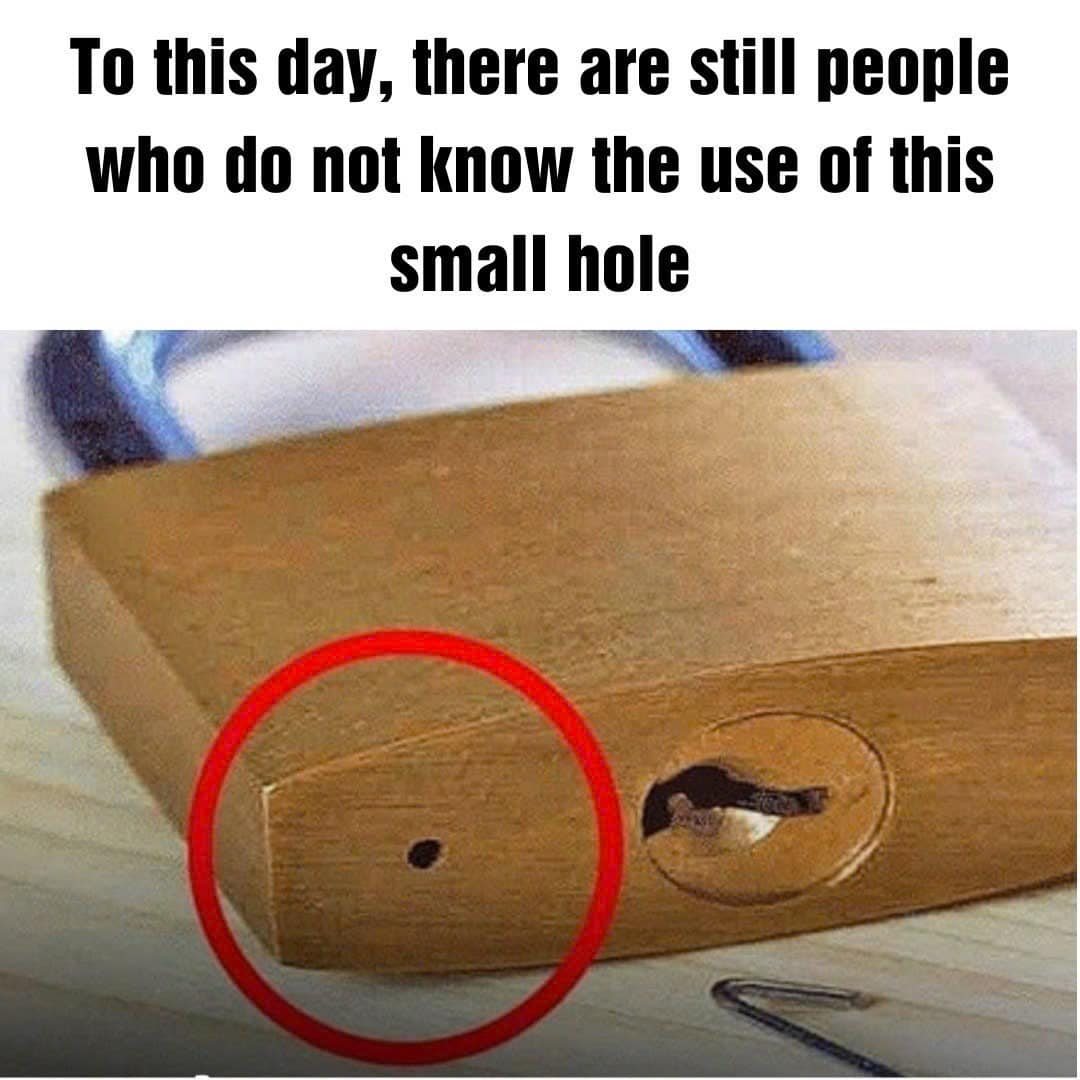
Currently, the market offers various types of locks with different designs, used for locking gates, doors, cabinets, etc., to protect property. One thing you might notice when observing closely is that locks often have 1-2 small holes next to the keyhole.
The reason for this is that locks are usually installed outdoors, such as in yards or gates, where they are exposed to rain, sunlight, wind, and water. Although they are often made of non-rusting materials like brass or stainless steel, prolonged exposure to environmental elements like rain and sunlight can cause oxidation and rust. Rainwater and moisture from dew or humidity can also lead to rust, making the lock stiff and difficult to open.
Thus, without a way to drain water, locks may become jammed, leading to difficulty in opening them, and in some cases, lock-breaking techniques may be required. To solve this issue, manufacturers have designed these small holes next to the keyhole to minimize water retention inside the lock and prevent rusting. While many users may not recognize the function of these holes, they are actually quite helpful for draining water from the lock.
Therefore, when purchasing locks, especially for places prone to water exposure such as gate locks or outdoor locks, it’s important to choose ones with these drainage holes. Without them, rainwater may accumulate inside the lock, causing it to rust quickly. Moreover, when using the lock, it’s a good idea to position it downward to allow water to drain out after each rain.
If you don’t want to end up breaking your lock after some time, remember the function of these small round holes. Some locks come with not just one but two holes for draining water.
Each lock has a small hole next to it. Their function is to act as a drainage area. If rainwater stagnates inside, the lock will rust quickly.