Have you ever made a pot of rice  , had leftovers, and thought, “I’ll just toss this in the fridge for tomorrow”? Be careful!
  It might seem harmless, but storing rice the wrong way can pose a hidden health risk. In this post, I’ll explain why improper storage can be dangerous, what you need to do to stay safe, and the best way to store rice so it stays fresh and safe to eat.
That’s right — rice, a staple in kitchens across the globe  , can easily turn into a magnet for harmful bacteria if you don’t handle it correctly after cooking. So pay attention — this could protect your health and your family’s while letting you keep enjoying your favorite dishes.
LET’S BREAK IT DOWN! 
 WHY STORING COOKED RICE WRONG IS A PROBLEM
When left out too long, rice enters a danger zone. That’s because it may contain Bacillus cereus, a bacteria that can survive cooking and multiply quickly at room temperature.
 Eating contaminated rice can lead to:
Nausea 
Vomiting 
Stomach cramps
Sudden diarrhea 
Symptoms can begin within just an hour of eating—and you might not realize the rice is to blame.
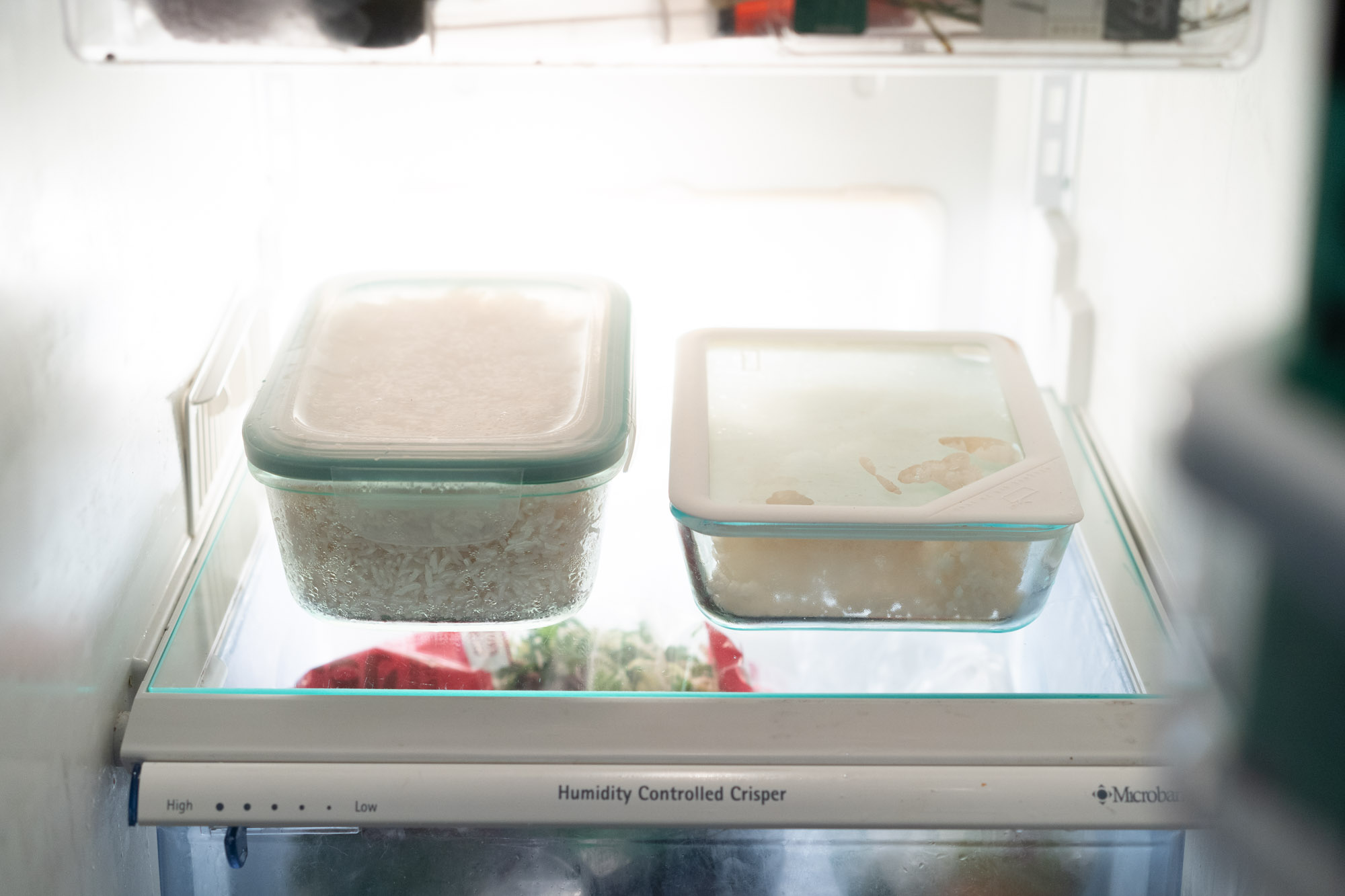
SAFE STORAGE TIPS FOR COOKED RICE
To avoid risks, follow these steps whenever you have leftover rice:
 Don’t leave rice sitting out for more than 1 hour.
Spread it out on a tray or keep it in a shallow container to cool it faster.
Once cooled (within the hour), transfer it into an airtight container and place it in the fridge. 
Eat within 24–48 hours—no later.
When reheating, make sure the rice is steaming hot (over 70°C). 
Never reheat more than once.
 GOOD TO KNOW:
Whether it’s white, jasmine, or brown rice — all types carry the same risk.
The bacteria doesn’t change the smell or taste of rice, so you won’t know it’s there.
Even reheating won’t remove the toxins created by Bacillus cereus.
 BONUS: FREEZING RICE SAFELY
Yes, you can freeze rice!  Here’s how:
Cool it fast, as described above.
Split it into portions.
Use containers or freezer bags.
Label with the freeze date.
It can be frozen for up to one month.
Defrost directly in the microwave or in a pan—never at room temperature.
 FINAL THOUGHT
Improperly storing cooked rice can be risky—but just a few easy steps will keep it safe and delicious. 
It’s not just about cooking rice well… it’s also about knowing how to store it smartly!