If you are one of those people who have deep appreciation for nature and enjoys being outdoors, gardening is the perfect activity for you. Among the rest, taking care of plants and flowers, watering them and making sure they are free of bugs, has a therapeutic power. No matter if you have a spacious garden or you simply have some flower pots inside the house or at your balcony, being around plants helps reduce the level of stress, improve your overall mood, and even provide low-impact exercise.
Of course, before you even consider starting gardening, you need to have some background knowledge, such as choosing the right plants for the area where you reside, the watering needs of each of the plants you grow, the quality of the soil used, and more.
The final result, whether newly grown flower buds or fruits and vegetables you were eager to taste, brings a pleasant sense of accomplishment.
However, one of the challenges that arise when you have plants are the insects and the rodents that may damage the greenery. In fact, managing pests is one of the crucial elements to maintaining a healthy garden. Preventing them is always the best strategy, although that easier said than done, there are plenty of ways to get rid of them without harming the plant. For example, chemical pesticides, or some more environment-friendly options like organic sprays and companion planting.
What you should have in mind, however, is that there are certain insects that do more good than harm. So, if you want your garden to shine, make sure you do research on the matter.
Recently, someone shared a photo of a leaf covered in petite, detailed black geometric shapes that give the feeling of the leaf being infected with a serious disease. But a few clicks away was the answer of what these strange shapes might be. Well, it turned out they are Nymphalis Antiopa butterfly eggs.
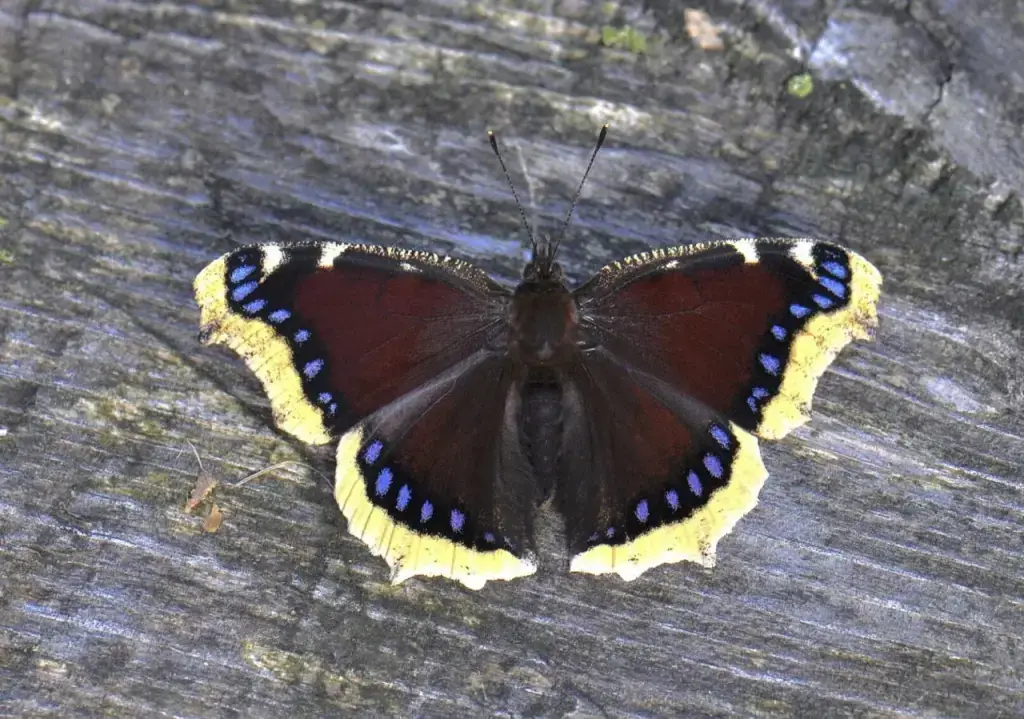
The Mourning Cloak butterfly, which is the more common name of these species of butterflies, lays its eggs in clusters. At first, they are yellowish or greenish, but the color gets darker as the time for hatching approaches.
Eventually, the eggs hatch into caterpillars with that are black with white dots and spines. They feed on the leaves of the host plant before pupating and evolving into butterflies.
Hearing this, you may assume they harm the plant, but that’s not entirely true.
In fact, these butterflies, can be quite beneficial because of several reasons.
For one, they contribute to pollination by visiting flowers for nectar, although not that significantly as bees or butterflies like monarchs. At the same time, they feed on rotting fruits and enhance the decomposition process. They also serve as prey for predators like birds and spiders, contributing to local biodiversity.
If you find these eggs or caterpillars in your garden and you still want to get rid of them, don’t kill them, simply place them somewhere else, such as to a tree or shrub.
Please SHARE this article with your family and friends on Facebook.






