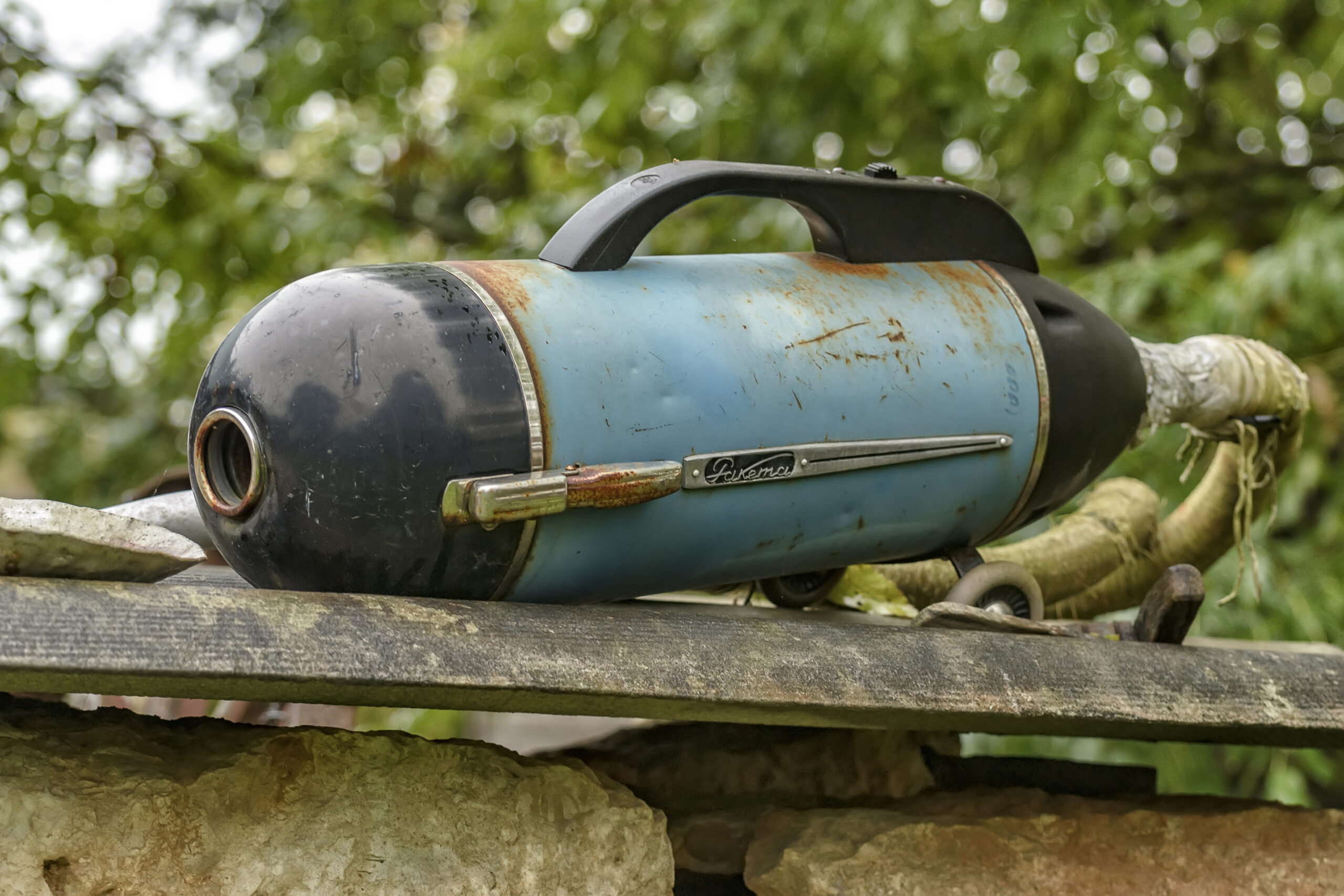
When I saw a photo of this object online, I had no idea what it was!
I wracked my brain trying to figure it out, but I just couldn’t put my finger on it.
Do you have any idea what it is?
If you guess a vintage vacuum cleaner, then you’d be correct! The vacuum cleaners as we know it today may look a little different now, thanks to advancements in science and technology.
But vacuum cleaners really went through a major transformation during the 1800s, when growing awareness of hygiene and advancements in technology meant that people were more aware of household cleanliness.
While the vacuum cleaner as we know it today had not yet been invented, there were some pretty amazing developments in cleaning apparatus during this period. Metal vacuum cleaners, though pretty basic by our modern standards, played a role in shaping the path toward more effective and efficient home cleaning.
During the 19th century, cleanliness became increasingly valued, and people kept looking for innovative and easy ways to maintain a tidy living environment. The Industrial Revolution, which we know know was a a period of profound technological change, had an impressive impact on various aspects of daily life, including household chores. While early vacuum-like devices existed, they were typically bulky, inefficient, and lacked the convenience we now associate with modern vacuum cleaners, per London’s Science Museum.

Metal found its way into the design and construction of some early cleaning contraptions. These metal vacuum cleaners, large, unwieldy canisters like the picture above, were manually operated and relied on human effort to create suction. A handle attached to a pump mechanism would be pumped continuously to generate suction, allowing users to collect dirt and debris from floors and carpets… But it was a lot of work.
One notable example from this era is the ‘Whirlwind,’ a metal vacuum cleaner patented by Ives W. McGaffey in 1869, according to Popular Mechanics. The Whirlwind was a hand-cranked device that used bellows to create suction. While it represented a leap forward in the evolution of cleaning tools, its practicality was limited, and it was far from the automated, electrically powered vacuum cleaners that would eventually be invented.