A quiet drive along Highway 50 toward the heart of rural Kansas slowly strips away the noise of modern life. Traffic thins, phone signals weaken, and wide-open skies begin to dominate the horizon. In West Chase County, surrounded by soybean fields and a gentle creek valley, sits a structure few would expect to find transformed into a home. What once stood as a forgotten agricultural silo has been reborn as the Owl’s Nest Silo House—a peaceful retreat that blends creativity, patience, and respect for the land. The calm of the setting is intentional, offering visitors a chance to slow down and reconnect with simplicity.
The vision behind the project belongs to Gerald Wiens, who first built a handcrafted log cabin on the property in 2019. His original plan was modest: a cozy getaway rented out on occasional weekends, offering guests a rustic place to unwind. He never imagined the response. As interest in quiet, rural escapes surged, especially during the pandemic, the cabin—known as the Paw Print Cabin—was booked for more than 180 nights in a single year. The steady demand revealed something deeper: people weren’t just looking for lodging, they were craving stillness, privacy, and experiences that felt personal rather than packaged.
That growing success led Gerald’s eyes to a nearby silo that had long stood unused but structurally sound. Instead of demolishing it, he saw possibility. Converting a circular concrete silo into a livable home was no simple task. Traditional layouts don’t translate easily to round walls, and every inch had to be carefully planned. Gerald spent months sketching, building models, and revising floor plans until the idea finally took shape. The result is a four-story structure rising 45 feet into the Kansas sky, transformed from a purely functional farm relic into a striking and fully livable two-bedroom home.
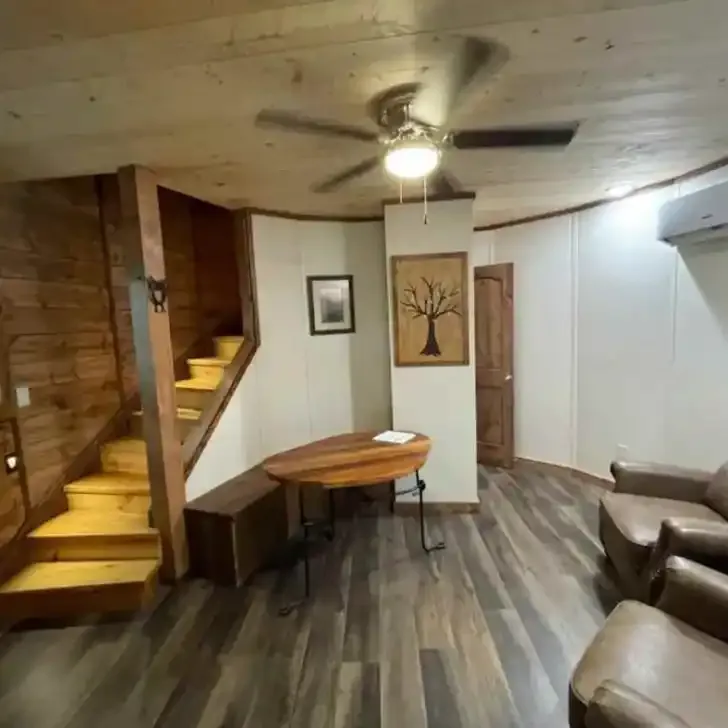
Inside, the silo feels warm and intentional rather than industrial. The circular living space invites conversation and quiet reflection, with plush leather seating arranged to encourage guests to slow down and stay awhile. Each level is thoughtfully designed to balance comfort with character, proving that unconventional spaces can feel just as welcoming as traditional homes. What makes the Owl’s Nest Silo House special isn’t just its design, but the philosophy behind it. Gerald didn’t build it to impress—he built it to preserve, to reuse, and to offer others a chance to experience something rare. In a world where tearing down is often easier than reimagining, this silo stands as proof that with creativity and care, even the most ordinary structures can be given a second life—and become something truly extraordinary.