Have you ever stopped to think how the kitchen tools we rely on every day came to be? Today, let’s take a trip back in time to explore the fascinating history of one such essential appliance: the mixer.
The Early Days of Mixing
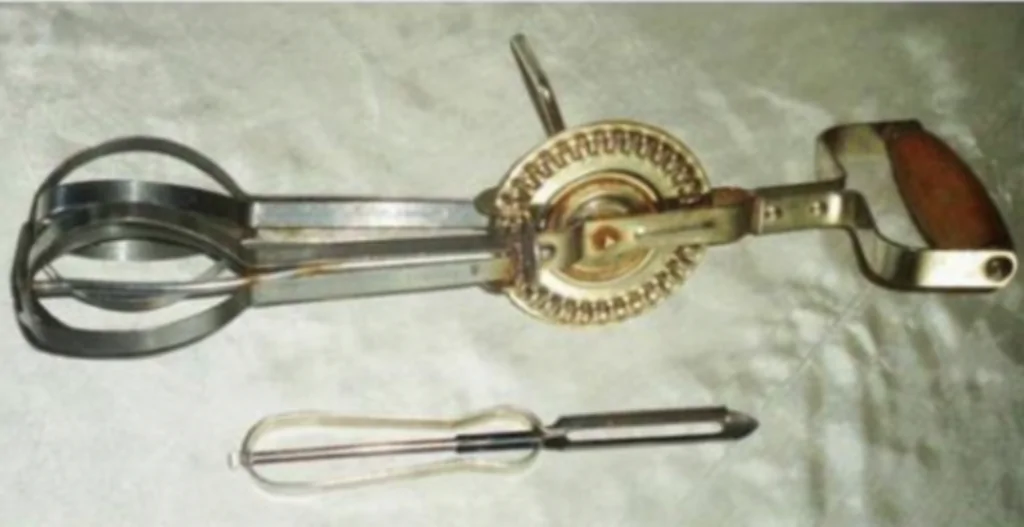
Our story begins in the mid-19th century when inventors across the globe were experimenting with ways to make the process of mixing ingredients easier and more efficient. In 1856, Ralph Collier, a tinner from Baltimore, patented the first mixer with rotating parts. Just a year later, E.P. Griffith introduced the whisk, a revolutionary tool for blending ingredients. The Monroe brothers, J.F. and E.P., also made their mark with their hand-turned rotary egg beater, which was granted a patent in the United States in 1859.
These early designs caught the attention of the Dover Stamping Company, who acquired the Monroe Brothers’ patent. The Dover egg beaters became a beloved American brand, known as the “Dover beater.” These beaters were held in such high regard that even a recipe from the Gazette newspaper of Cedar Rapids, IA in February 1929 featured the famous Dover beater in a delightful dessert recipe called “Hur-Mon Bavarian Cream.”
Enter the Electric Era
It wasn’t until 1885 that the first electric mixer made its debut, thanks to the ingenious mind of American inventor Rufus Eastman. However, it was the Hobart Manufacturing Company that truly revolutionized the industry with their large commercial mixers. In 1914, they introduced a groundbreaking new model that forever changed the landscape of mixers.
In the early 20th century, two notable American brands, the Hobart KitchenAid and the Sunbeam Mixmaster, became popular choices among consumers. But despite their popularity, domestic electric mixers were still a rarity in most households until the 1920s when they began to be widely adopted for home use.
The Stand Mixer: A Game Changer
In 1908, Herbert Johnston, an engineer for the Hobart Manufacturing Company, had a eureka moment while observing a baker mix bread dough with a metal spoon. He realized there had to be a better way and set out to create a mechanical counterpart to simplify the process.
By 1915, Johnston’s 20-gallon mixer had become standard equipment in most large bakeries. Just four years later, in 1919, the Hobart Manufacturing Company introduced the Kitchen Aid Food Preparer, which went on to become known as the stand mixer. This revolutionary invention quickly became a staple in kitchens across the country.
From the hand-turned rotary beaters of the 19th century to the introduction of electric motors and the birth of the stand mixer, this essential kitchen tool has come a long way. It has undergone numerous innovations to make our lives easier in the kitchen.
So, the next time you whip up a batch of cookies or blend together a mouthwatering cake batter, take a moment to appreciate the rich history behind your trusty mixer. It’s a testament to human ingenuity and the desire to simplify everyday tasks.
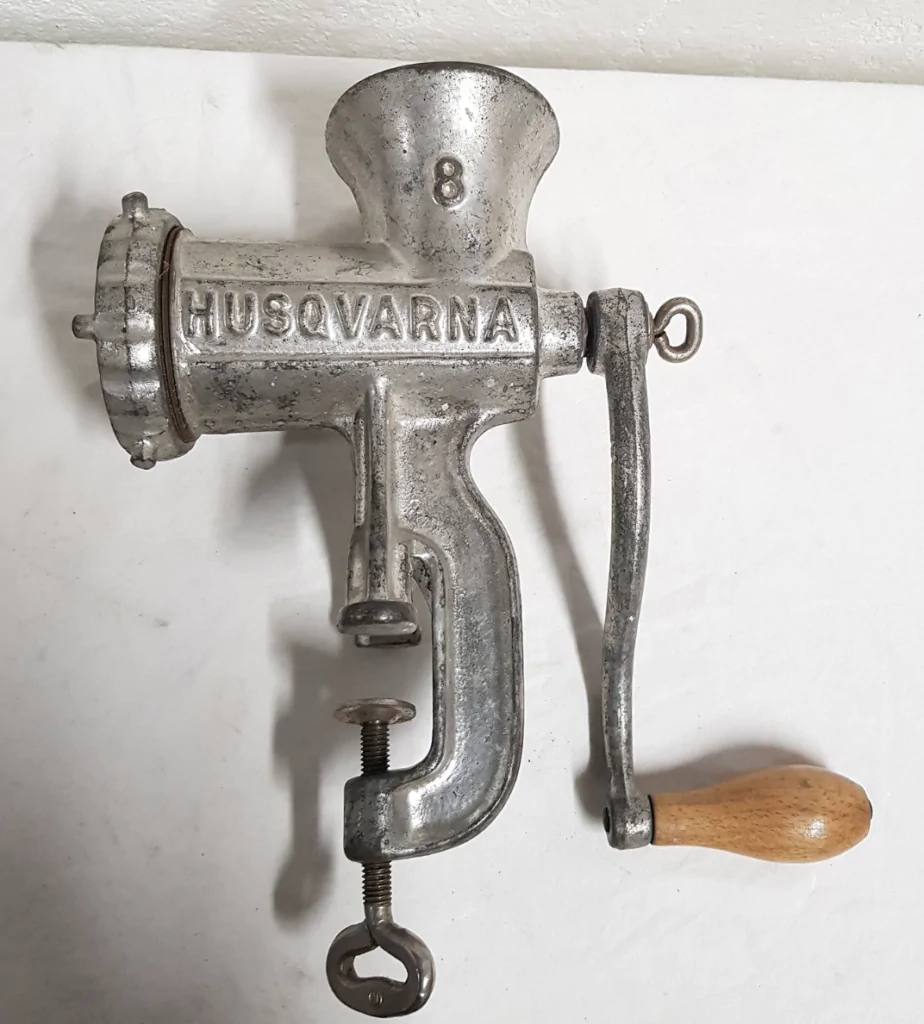
In addition to the mixer, another versatile kitchen tool that has a fascinating history is the meat grinder. Also known as a “meat mincer” in the United Kingdom, this appliance has been used for mincing and mixing raw or cooked meat, fish, vegetables, and more.
The journey of the meat grinder dates back to the nineteenth century when Karl Drais invented the first version of this remarkable tool. Initially, meat grinders were hand-cranked, pushing the meat through a metal plate with small holes, resulting in long, thin strands of flesh.
With advancements in technology and the widespread availability of electricity, manufacturers began creating powered meat grinders. These modern electric grinders enable the seamless and uniform processing of several pounds of beef. Some models even come with attachments that add functionality, such as sausage-making, kibbe, and juicing, which has dramatically expanded the range of applications for meat grinders.
So, the next time you’re mincing meat for a savory dish or experimenting with homemade sausages, remember the journey and ingenuity behind your meat grinder. It’s a testament to how kitchen tools have evolved to make our culinary adventures more accessible and enjoyable.