Encountering tick eggs in your backyard is a concern not to be taken lightly. Ticks are notorious for carrying diseases, and their eggs, often found in sheltered outdoor areas, can be the start of a problematic infestation.
This comprehensive guide aims to provide you with the essential knowledge and steps to identify, handle, and prevent tick eggs effectively.
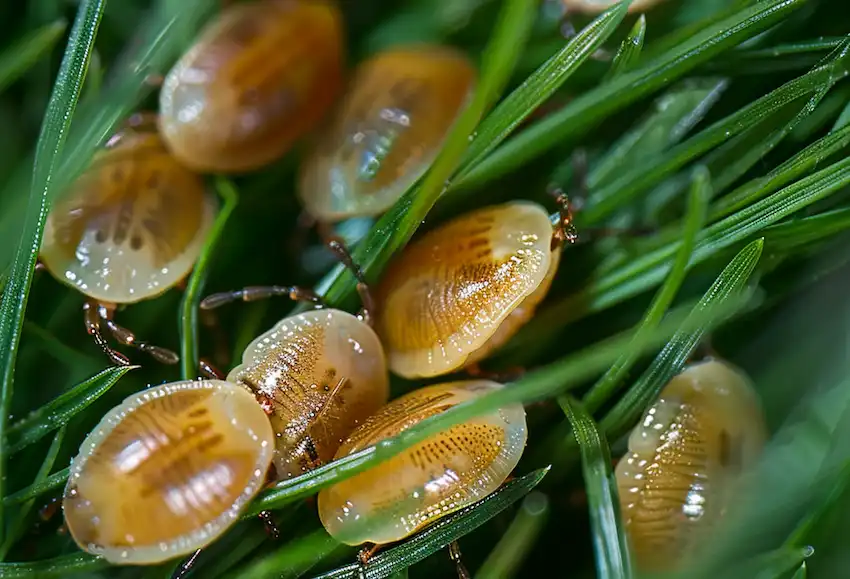
Tick eggs are tiny, typically measuring about 0.5 mm in diameter – the size of a poppy seed.
They are usually oval or pear-shaped with a translucent or slightly whitish appearance, though this can vary slightly depending on the tick species.
Tick eggs are often laid in clusters and attached to vegetation, leaf litter, or other surfaces near the ground.
As they mature, they may become more opaque and take on a color closer to the adult tick of the species.
The eggs are typically smooth and glossy in texture, and their color can range from pale yellow to light brown.

The primary concern with tick eggs is the potential for them to hatch into larvae, which can carry diseases like Lyme disease and Rocky Mountain Spotted Fever.
It’s crucial to handle tick eggs with caution to prevent the spread of these diseases.
When dealing with tick eggs in your backyard, it’s recommended to consult with a professional pest control expert or a veterinarian for proper identification and guidance on tick control and removal.
For individual ticks that have attached to skin, use fine-tipped tweezers to grab the tick firmly near its head or mouth and pull it away from the skin without jerking or twisting.
After removal, dispose of the tick by putting it in alcohol, a sealed bag, or flushing it down the toilet.
Remove Deer-Attracting Plants: Deer ticks, responsible for spreading Lyme disease, can be deterred by eliminating plants like tulips, hostas, and azaleas, which attract deer.
Introduce Tick-Repelling Plants: Planting herbs like mint, rosemary, and flowers such as chrysanthemums can help keep ticks away.
Regular Lawn Maintenance: Keep your lawn mowed and reduce heavy brush and ground cover. This reduces the habitat for ticks.
Manage Woodpiles and Debris: Ticks lay eggs in dark, moist places. Keep woodpiles elevated off the ground and away from the house.
Discourage Small Host Animals: Maintain stonewalls and avoid bird feeders that can attract rodents, which are common hosts for ticks.
Use Natural Tick Repellents: Essential oils like cedarwood, neem, and citronella, and diatomaceous earth can be effective natural repellents.
Employ Tick Tubes: These are no-spray tools that can kill ticks and prevent diseases.
Incorporate Rough Textures: Using lava rock or pebble mulch in garden beds makes the area less hospitable for ticks.
Create Lawn-Free Zones: Use hardscaping to reduce tick habitats.
Apply Insecticides Carefully: If necessary, use insecticides like synthetic pyrethroids or natural alternatives like cedar oil.